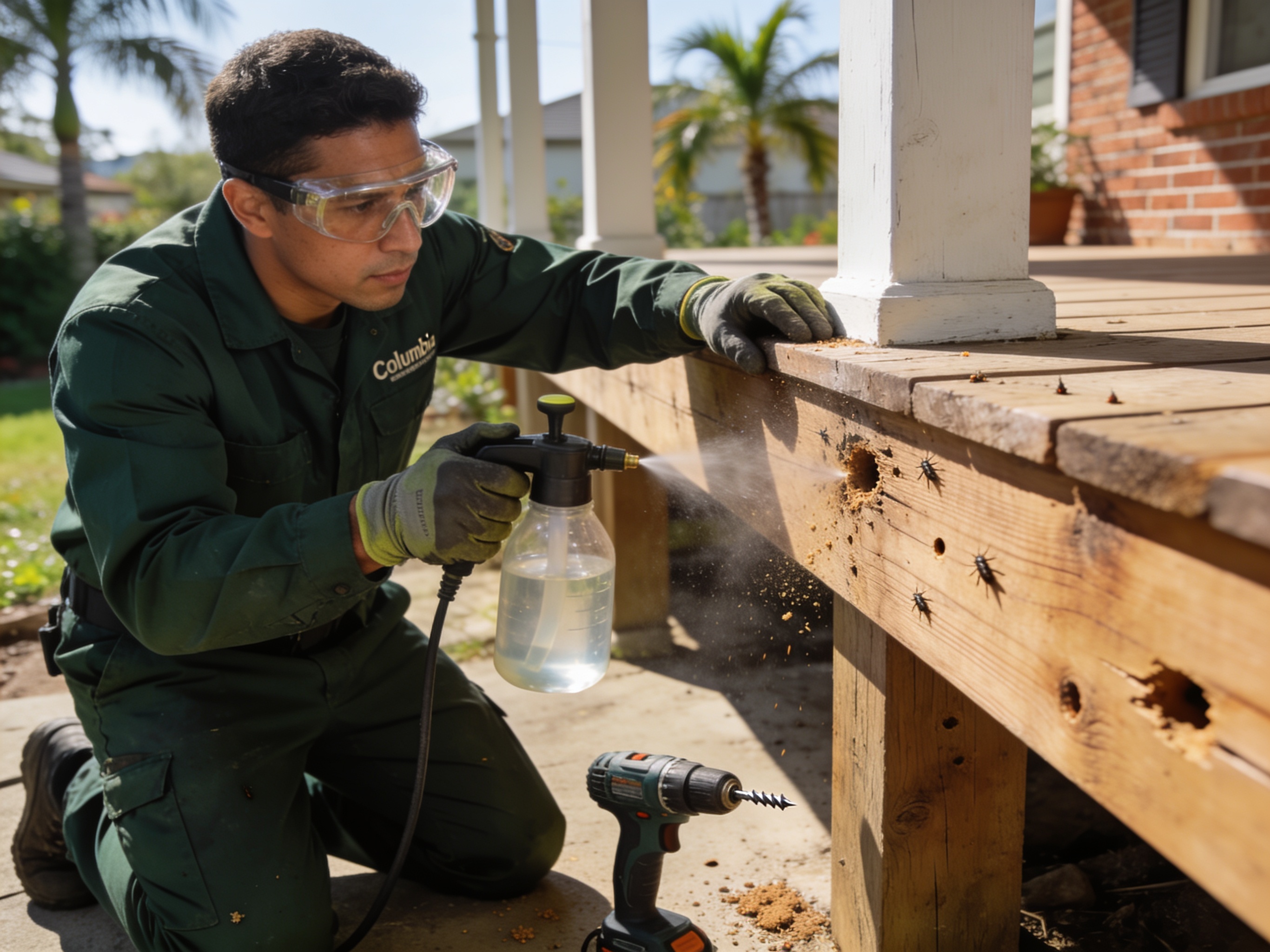
Wood-boring beetles, often mistaken for termites, can cause significant damage to the wooden structures of homes throughout Columbia, from the historic properties in Shandon and Earlewood to newer constructions in Forest Acres. These pests tunnel through wood, weakening beams, floor joists, and furniture. Unlike termites, which consume cellulose, beetles typically lay eggs in wood, and their larvae do the damage as they bore through it, creating tell-tale exit holes and powdery frass. Our humid subtropical climate, with its warm temperatures and high moisture levels, creates an ideal environment for various species of wood-boring beetles to thrive, making proactive inspection and treatment crucial for homeowners in Richland County.
Identifying a wood-boring beetle infestation requires a keen eye and understanding of their distinct signs. While termites leave mud tubes, beetles often leave small, round or oval exit holes on the surface of wood, along with piles of fine, sawdust-like material known as frass. The type of frass can even help identify the beetle species; powderpost beetles, for instance, leave a very fine, flour-like dust, while old house borer larvae produce a coarser, pellet-like frass. Homes near the Riverbanks Zoo or the University of South Carolina, particularly those with older wooden elements, are especially susceptible to these hidden invaders. Early detection is key to preventing extensive structural damage and costly repairs.
Effective wood-boring beetle control involves a multi-faceted approach, tailored to the specific beetle species and the extent of the infestation. Our process begins with a thorough inspection to accurately identify the pest and assess the damage, whether it's in a crawl space in Rosewood or an attic in the Vista. Treatment options range from targeted liquid applications to fumigation for severe cases, always prioritizing the safety of your family and pets. We also provide recommendations for moisture control and wood sealing, as beetles are often attracted to damp wood. Protecting your investment, whether it's a century-old home or a newly built property in nearby Lexington or Irmo, is our top priority.
Beyond active treatment, South Carolina Termite Pros emphasizes long-term prevention strategies to keep wood-boring beetles from returning. This includes addressing moisture issues in crawl spaces and basements, which are common in our humid climate, and ensuring proper ventilation. We also advise on inspecting any new wood brought into your home, such as firewood or antique furniture, as these can be sources of new infestations. For properties around landmarks like the South Carolina State House or Finlay Park, where historical preservation is important, our methods are designed to be effective yet minimally invasive, protecting the integrity of your valuable wooden structures.
Technician insight
In Columbia, the thing that catches most people out with wood-boring beetle control is often misidentification, especially confusing them with termites. Homeowners in older neighborhoods like Shandon or Earlewood, with original wooden structures, might dismiss the small holes and frass as just 'old house problems' when it's actually an active infestation silently weakening their home.
Old House Borer in a Rosewood Attic
A homeowner in Rosewood called us concerned about sawdust-like material in their attic. Upon inspection, we found extensive old house borer activity in the pine roof joists, characterized by oval exit holes and coarse frass. We performed a targeted liquid treatment to the infested timbers and advised on improving attic ventilation to reduce moisture, successfully halting the damage.
Wood Boring Beetle Control Services Services We Offer
✓Powderpost Beetle Treatment
Targeted treatment solutions for powderpost beetles, which infest hardwoods and leave fine, powdery frass, often found in flooring, furniture, and structural timbers.
✓Old House Borer Extermination
Specialized control for old house borers, common in pine and other softwoods, characterized by larger, oval exit holes and coarser frass, often found in attics and crawl spaces.
✓Wood Borer Inspection & Identification
Comprehensive inspections to accurately identify the specific type of wood-boring beetle and assess the extent of damage, crucial for effective treatment planning.
✓Structural Wood Remediation
Assessment and recommendations for repairing or replacing wood damaged by beetle infestations, restoring the structural integrity of your Columbia property.
✓Preventative Wood Treatment
Application of protective treatments to uninfested wood to deter future wood-boring beetle activity, especially beneficial for new constructions or renovated areas.
✓Moisture Control for Beetle Prevention
Solutions to reduce moisture levels in crawl spaces and basements, creating an unfavorable environment for wood-boring beetles that thrive in damp conditions.
Wood Boring Beetle Control Services Cost in South Carolina
| Service | Typical Range | What Affects It |
|---|---|---|
| Basic Inspection & Identification | $75–$150 | For initial assessment and species identification; may be waived with treatment. |
| Localized Treatment (Small Area) | $300–$800 | For infestations in a single beam, small section of flooring, or piece of furniture. Price varies by beetle type and product used. |
| Full Crawl Space Treatment | $800–$2,500+ | For widespread infestations in the crawl space of an average-sized home. Price depends on crawl space accessibility and severity. |
| Whole-House Fumigation (Severe Cases) | $2,500–$7,000+ | Reserved for extensive, widespread infestations throughout the entire structure. Price varies by house size and complexity. |
Ranges are typical for South Carolina and confirmed with an exact written quote before any work starts.
How it works
- 1
Thorough Inspection & Species Identification
Our expert technicians will conduct a detailed inspection of your property, focusing on all wooden elements in areas like Shandon, Five Points, or Rosewood. We'll identify signs of beetle activity, such as exit holes and frass, and accurately determine the species of wood-boring beetle present.
- 2
Customized Treatment Plan Development
Based on our findings, we'll develop a tailored treatment plan. This plan considers the beetle species, the severity of the infestation, and the specific areas affected, ensuring the most effective and safest approach for your Columbia home.
- 3
Targeted Application & Extermination
We apply targeted treatments directly to infested wood, using methods that are effective against the specific beetle species while minimizing disruption to your home. This may involve liquid insecticides or other specialized techniques.
- 4
Damage Assessment & Prevention Recommendations
Following treatment, we assess any structural damage and provide clear recommendations for repairs or remediation. We also offer advice on long-term prevention, including moisture control and protective wood treatments, to safeguard your property in Richland County from future infestations.
Pricing
Pricing for wood-boring beetle control varies significantly based on the type of beetle, the size of the infested area, and the chosen treatment method. A detailed inspection is necessary for an accurate quote.