
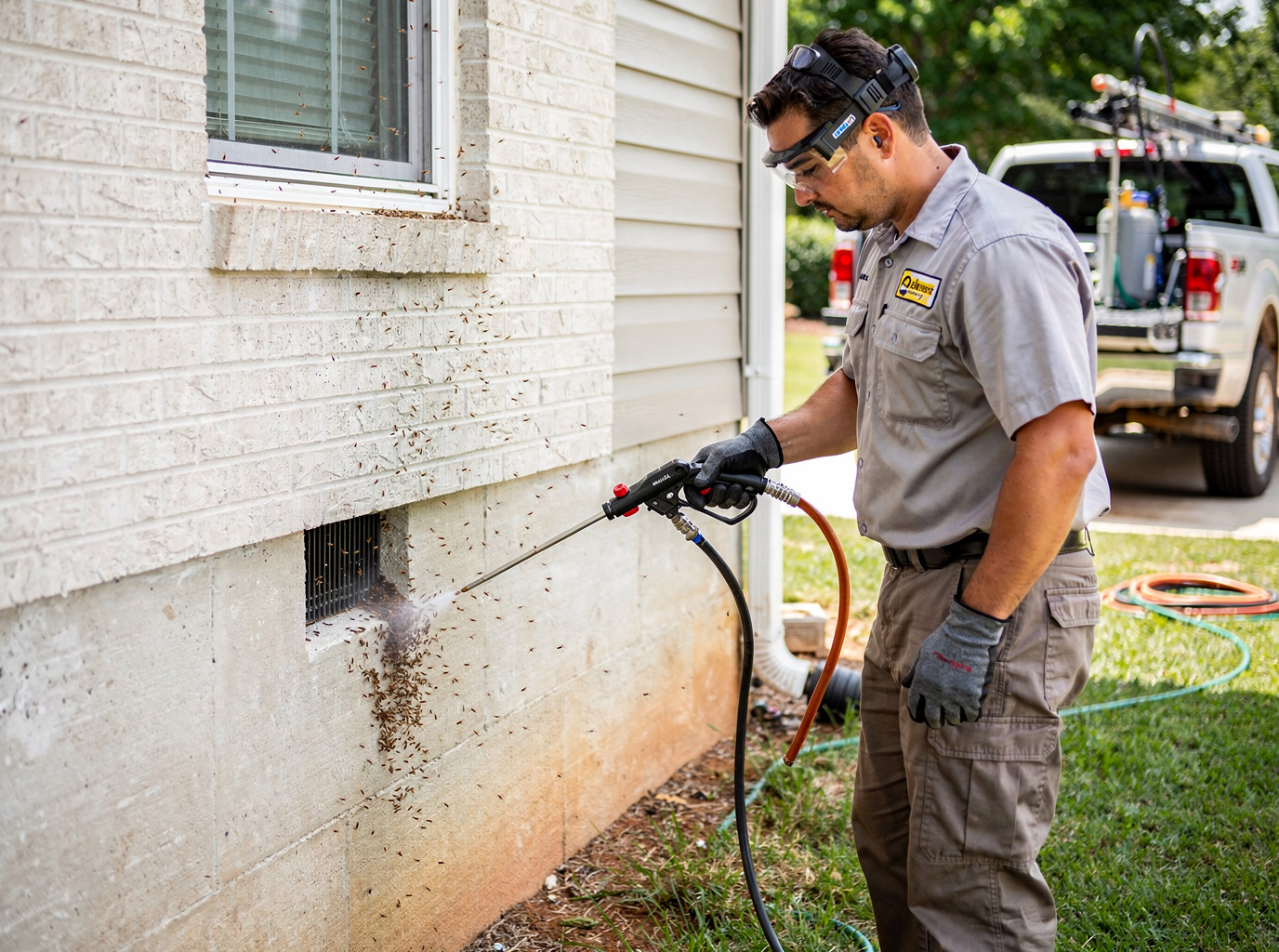
When temperatures rise in Columbia, especially after spring rains, termite swarmers can emerge, signaling an active infestation within your home. These winged reproductive termites are often mistaken for flying ants, but a closer look reveals key differences: termites have straight antennae, a broad waist, and wings of equal length, while ants have elbowed antennae, a pinched waist, and unequal wings. Seeing swarmers, whether inside your home in Rosewood or outside near the University of South Carolina, is a definitive sign that a mature termite colony is present and actively attempting to establish new colonies. Ignoring them allows the existing colony to continue damaging your property and new colonies to form nearby.
The presence of swarmers often indicates a well-established colony, potentially hidden for years within the wooden structures of your home. Homes in older neighborhoods like Shandon or Five Points, with their mature trees and original construction, are particularly susceptible. Our approach goes beyond simply addressing the visible swarmers; it involves a thorough inspection to locate the source of the infestation, identify entry points, and determine the extent of the damage. We understand the specific challenges posed by Columbia's humid subtropical climate, which creates ideal conditions for subterranean termites to thrive year-round, making prompt and effective treatment essential.
Effective termite swarmer control in Richland County requires a multi-faceted strategy tailored to the specific species and the unique characteristics of your property. We utilize advanced baiting systems or liquid treatments, depending on the situation, to eliminate the entire colony, not just the visible swarmers. For instance, a home in Forest Acres might benefit from a perimeter liquid treatment to create an immediate protective barrier, while a baiting system could be more appropriate for a property with complex landscaping or near sensitive areas. Our goal is to eradicate the current threat and implement preventative measures to safeguard your home against future termite activity, ensuring long-term protection for your investment.
Understanding Termite Swarmers in Columbia's Climate
Columbia's humid subtropical climate, with its hot summers and mild winters, creates an almost year-round breeding ground for subterranean termites. Swarmers are most commonly seen in the spring, typically after a rain event when temperatures climb, but can also emerge at other times if conditions are right indoors. The older housing stock common in areas like Earlewood and the Vista, often built with wood foundations or direct wood-to-soil contact, provides ample opportunities for termites to establish colonies. Recognizing the signs of swarmers early and understanding their life cycle is crucial for homeowners in Lexington, West Columbia, and Irmo, as these pests can cause significant structural damage before any visible signs appear.
Technician insight
In Columbia, the thing that catches most people out with termite swarmers is mistaking them for flying ants, especially in the spring. Our humid subtropical climate means swarmers can be a year-round issue, not just seasonal, and by the time you see them, the colony is already well-established within your home's structure. Often, homes in older neighborhoods like Shandon or Rosewood, with their original construction and mature trees nearby, are prime targets.
Swarmer Outbreak in a Shandon Home
A homeowner in Shandon called us after noticing dozens of winged insects emerging from a wall near their living room window. They initially thought they were ants. We quickly identified them as subterranean termite swarmers, indicating a mature colony. Our inspection revealed mud tubes in the crawl space and active feeding in a floor joist. We implemented a comprehensive liquid barrier treatment around the foundation and strategically placed bait stations, successfully eliminating the colony and stopping further swarming.
Termite Swarmers Services We Offer
✓Termite Swarmer Identification
Accurate identification of termite swarmers versus flying ants, ensuring the correct pest is targeted and appropriate treatment is applied to your Columbia home.
✓Active Colony Location & Assessment
Thorough inspection to pinpoint the source of the swarming activity and assess the extent of the underlying termite colony and potential damage within your property.
✓Targeted Swarmer Eradication
Immediate treatment to eliminate visible termite swarmers and prevent them from establishing new colonies, focusing on entry and exit points.
✓Subterranean Termite Colony Elimination
Comprehensive treatment plans, including baiting systems or liquid barriers, to eradicate the entire subterranean termite colony responsible for the swarming.
✓Post-Treatment Monitoring
Ongoing monitoring services to ensure the effectiveness of the treatment and detect any new termite activity, providing long-term peace of mind for your home in Richland County.
✓Preventative Swarmer Control
Strategic preventative measures designed to deter future termite swarming events and protect your property from new infestations, tailored to Columbia's climate.
Termite Swarmers Cost in South Carolina
| Service | Typical Range | What Affects It |
|---|---|---|
| Swarmer Inspection & Identification | $0–$150 | Often included with a full termite inspection, or a small fee for standalone swarmer ID. |
| Localized Swarmer Treatment (Minor) | $200–$500 | For very small, contained swarmer activity, without a full colony treatment. |
| Full Colony Treatment (Liquid Barrier) | $800–$2,500+ | Price varies significantly by home size, foundation type, and extent of infestation, common for homes in Richland County. |
| Full Colony Treatment (Baiting System) | $1,000–$3,000+ | Initial installation cost, often with ongoing monitoring fees. Ideal for complex landscapes or sensitive areas. |
Ranges are typical for South Carolina and confirmed with an exact written quote before any work starts.
How it works
- 1
Initial Inspection & Swarmer Confirmation
We begin with a detailed inspection of your property in Columbia, focusing on where swarmers were sighted. We'll confirm if they are indeed termites and look for other signs of infestation like mud tubes or damaged wood, inside and out.
- 2
Colony Source Identification
Our experts then work to locate the active termite colony responsible for the swarmers. This often involves inspecting crawl spaces, foundations, and exterior perimeter, especially in older homes around Finlay Park or Shandon.
- 3
Customized Treatment Plan Development
Based on our findings, we develop a tailored treatment plan using either liquid termiticides or baiting systems, designed to eliminate the entire colony and prevent future swarms from emerging.
- 4
Application & Follow-Up
Our team applies the chosen treatment method with precision. We then schedule follow-up visits to monitor the effectiveness of the treatment and ensure the colony has been eradicated, providing ongoing protection.
Pricing
Our pricing for termite swarmer control is based on the scope of the infestation, the size of your property, and the chosen treatment method, with upfront quotes provided after a thorough inspection.