
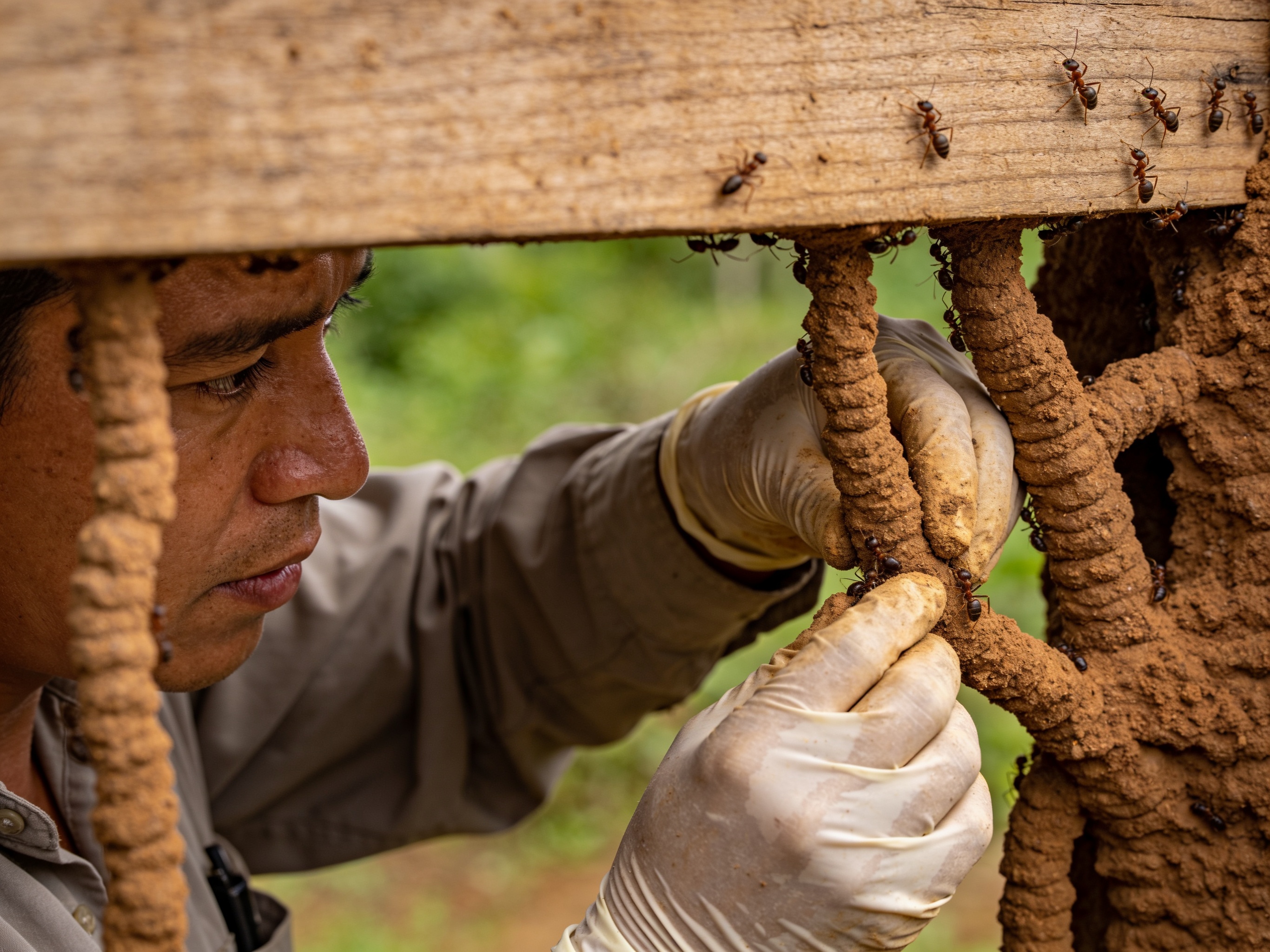
Termite mud tubes are a critical warning sign for homeowners in Columbia, SC. These protective tunnels, constructed by subterranean termites from soil, wood, and saliva, serve as highways from their underground colonies to your home's wooden structures. In a humid subtropical climate like ours, especially with the hot summers and mild winters, termites remain active year-round, making these tubes a constant threat. We frequently find them along foundations in neighborhoods like Rosewood and Earlewood, often hidden in crawl spaces or behind landscaping. Ignoring mud tubes allows termites to continue their destructive work unseen, potentially leading to significant structural damage that can be costly to repair. Early detection and professional intervention are essential to protect your property.
Understanding the different types of mud tubes is crucial for effective termite control. Working across Richland County, from Lexington to West Columbia, we often encounter exploratory tubes, which are thinner and less structured, signaling termites are searching for food sources. Working tubes are more substantial, providing active pathways for termites to commute between their nest and your home, commonly found near the University of South Carolina campus buildings or older homes in Five Points. Drop tubes extend from wooden structures back to the ground, allowing termites to return to the soil. Each type indicates varying levels of termite activity and requires a specific approach for eradication and prevention. Our team is trained to identify these subtle differences and implement targeted solutions.
Beyond simple removal, our service for termite mud tubes in Columbia involves a comprehensive strategy. We don't just clear away the visible evidence; we investigate the source of the infestation. This often means inspecting inaccessible areas like wall voids, crawl spaces, and attics, which are common entry points for termites in the older homes prevalent around the South Carolina State House and Vista areas. The presence of mud tubes indicates an active colony, and merely destroying the tubes won't eliminate the termites themselves. Our approach includes treating the active colony, establishing protective barriers, and advising on moisture control and wood-to-soil contact issues that are common in our local environment, especially after heavy rains that contribute to soil moisture around foundations.
Technician insight
In Columbia, the thing that catches most people out with termite mud tubes is how quickly they can reappear, especially after heavy rains. Our humid subtropical climate means the ground stays moist, which is ideal for termites to rebuild their tunnels. Homeowners often clear away visible tubes only to find them back a few weeks later, not realizing that just removing the tube doesn't address the colony actively working underground.
Hidden Mud Tubes in a Shandon Crawl Space
A homeowner in Shandon called us after noticing some unexplained wood dust near their baseboards. During our inspection, we found no visible mud tubes on the exterior. However, upon entering the crawl space, we discovered extensive mud tubes running along the foundation walls and floor joists, indicating a significant, active termite infestation. We removed the tubes, treated the affected wood, and established a comprehensive liquid barrier around the home's perimeter to eradicate the colony and prevent future incursions.
Termite Mud Tubes Services We Offer
✓Mud Tube Inspection & Identification
Thorough inspection of your property to accurately identify termite mud tubes, distinguish them from other insect activity, and assess the extent of termite presence, crucial for homes near Riverbanks Zoo or Finlay Park.
✓Active Mud Tube Removal
Careful and complete removal of active mud tubes from foundations, crawl spaces, and other affected areas, preventing further termite access to your home's structure.
✓Inactive Mud Tube Assessment
Evaluation of old or inactive mud tubes to determine if previous termite activity has ceased or if there's a risk of re-infestation, particularly important for historic properties in Shandon.
✓Post-Removal Treatment Recommendations
Expert advice and recommendations for targeted treatments following mud tube removal to eliminate the underlying termite colony and prevent future infestations in your Columbia home.
✓Crawl Space Termite Barrier Installation
Installation of protective barriers in crawl spaces, a common entry point for termites in Richland County, to deter future mud tube construction and termite entry.
✓Foundation Termite Monitoring
Ongoing monitoring services around your home's foundation to detect any new termite activity or mud tube formation early, offering peace of mind for properties in Forest Acres.
Termite Mud Tubes Cost in South Carolina
| Service | Typical Range | What Affects It |
|---|---|---|
| Mud Tube Inspection (Stand-alone) | $75–$150 | For identifying tubes and assessing activity; often credited if treatment proceeds. |
| Small-Scale Mud Tube Removal & Treatment | $300–$600 | For localized mud tube presence with early-stage infestation, typically involving spot treatments. |
| Moderate Mud Tube Removal & Treatment | $600–$1,500 | For more widespread mud tube presence, potentially requiring perimeter liquid treatments. |
| Extensive Mud Tube Removal & Treatment | $1,500–$3,000+ | For severe infestations indicated by numerous mud tubes across multiple areas, often requiring comprehensive barrier treatments. |
Ranges are typical for South Carolina and confirmed with an exact written quote before any work starts.
How it works
- 1
Initial Inspection & Assessment
We begin with a detailed inspection of your property, focusing on common termite entry points and areas where mud tubes are likely to be found, such as foundations, crawl spaces, and exterior walls. We assess the type of mud tubes and the level of termite activity.
- 2
Mud Tube Removal & Area Preparation
Once identified, we carefully remove all visible mud tubes. This step is performed with precision to avoid disturbing termites unnecessarily, which could cause them to retreat deeper into your home. We then prepare the area for treatment.
- 3
Targeted Termite Treatment
Following removal, we apply targeted treatments designed to eliminate the active termite colony. This may involve liquid treatments to create a protective barrier around your home's foundation or bait systems, depending on the specific situation and severity.
- 4
Preventative Measures & Recommendations
We provide recommendations for preventative measures you can take, such as improving drainage, reducing wood-to-soil contact, and addressing moisture issues, all common concerns in Columbia's climate. We also discuss ongoing monitoring options.
Pricing
Pricing for termite mud tube services varies based on the extent of the infestation and the treatment required.